The 5-minute meditation: short, but real
Coherent breathing, express body scan, 5-4-3-2-1 grounding: three 5-minute meditations that work, and where to place them in your day.
No time to meditate? Five minutes is enough — not as a cut-rate version, but as a tool in its own right: the short pause interrupts a runaway day and builds the habit. Three express formats, and the best moments to place them.
Do five minutes actually count?
Yes — and not as a consolation prize. A 5-minute meditation is not a 20-minute meditation shrunk down: it's a different tool with its own job. Twenty minutes dig deep; five minutes interrupt — they break the momentum of a runaway day, put the breath back at the center, and make the next decision clearer.
Above all: five minutes kept every day build the habit that twenty minutes "when I find the time" never will. Regularity beats duration — the most solid rule in all of learning to meditate.
Three short formats that work
Coherent breathing — measurable calm
Six breaths per minute for five minutes: inhale 5 seconds, exhale 5 seconds, without forcing. The simplest guided breathing exercise there is — and one of the best documented.
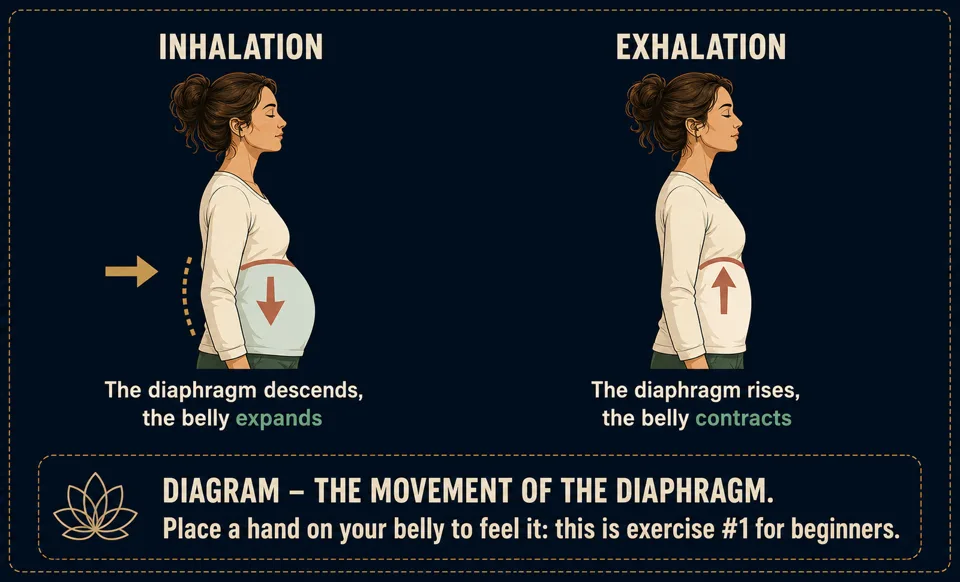
The express body scan — coming back to the body
One minute per floor: feet and legs, hips and belly, chest and breath, shoulders and hands, face and head. Nothing to change — just to feel. Ideal after a tense meeting or before walking in your front door: the day stays outside.


5-4-3-2-1 grounding — when everything spins
Five things you can see, four you can hear, three you can touch, two you can smell, one long exhale. Attention leaves the mental movie and returns to the room. Discreet enough for a train, a queue, a hallway.
Where to place those five minutes
A short pause is strongest at transitions — the moments you change roles:
- Before starting — coffee still warm, before the first screen.
- Between blocks — after a hard meeting, before an important call.
- The doorstep — in the parked car or before opening the door: work stays outside.
- Before a decision — five calm minutes often beat an hour of hesitation.
In MeditaDream, the 4 Minutes category is built exactly for these hinges: complete guided pauses that play offline, even on the subway. The app is completely free — the short pause has no excuse left to skip.
Frequently asked questions
What can five minutes a day really change?
Kept daily, they install the reflex of returning to calm — and that reflex, more than duration, is what changes your days. Many people naturally lengthen their sessions after a few weeks.
Morning or evening for a 5-minute session?
Whichever you can keep. Morning protects the session from surprises; transitions (before a meeting, arriving home) give the most immediate effect.
Do I need somewhere quiet?
It's more comfortable, not essential: 5-4-3-2-1 grounding and coherent breathing work on a train or in an open office, eyes open if needed.
Rather practice than read?
Everything in this article can be practiced in MeditaDream, a free meditation app: 129 guided meditations and 17 immersive worlds, with no subscription, no ads, no account, and fully offline.
✦ Discover the free app