How to start meditating: a beginner’s guide
What meditation actually is, why it's worth starting, and the 5 myths that block beginners. A simple, free guide to your first meditation.
Want to learn how to meditate but don't know where to begin? This beginner's guide starts from zero: what meditation actually is, what a daily practice brings, and the myths that make people quit. No equipment, no cost — just your attention and a few minutes a day.
Start here
What is meditation?
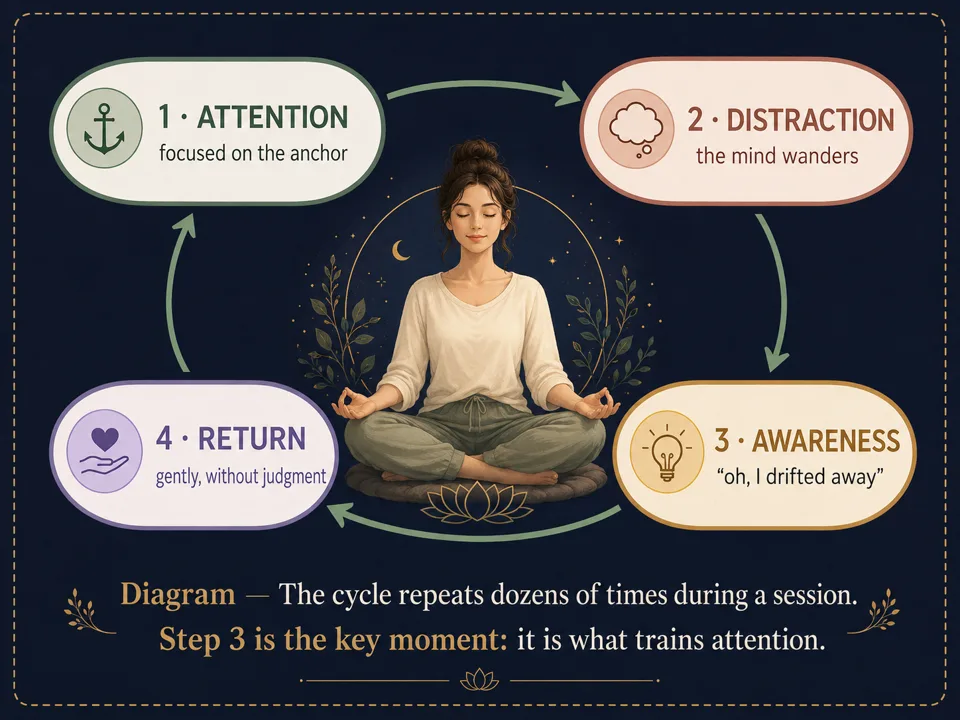
To meditate is to train your attention. Like a muscle, attention gets stronger through repetition: you choose an anchor point (often the breath), you notice when the mind wanders, and you gently bring it back. That's all. This simple gesture, repeated hundreds of times, progressively transforms your relationship with your thoughts and emotions.
✅ Meditation is…
- Training of attention, accessible to everyone
- Observing what happens, without judging
- Coming back again and again to your anchor
- A secular practice, backed by research
❌ It is not…
- “Emptying the mind” or stopping thoughts
- Mandatory relaxation (sometimes you get restless, that's normal)
- Reserved for “zen” or flexible people
- A religion, nor a performance to succeed at
Why meditate? The benefits
🧠 Mental
Better concentration, distance from rumination, clarity in decisions, stronger working memory.
💗 Emotional
Less stress and anxiety, better emotional regulation, more patience and kindness toward yourself.
🌙 Physical
Deeper sleep, calmer blood pressure, muscle relaxation, fuller everyday breathing.


The 5 misconceptions that block beginners
“I can't do it, I'm thinking all the time”
“You have to meditate for a long time for it to help”
“You have to sit in lotus”
“Meditating means relaxing”
“I don't have time”
Your path through this library
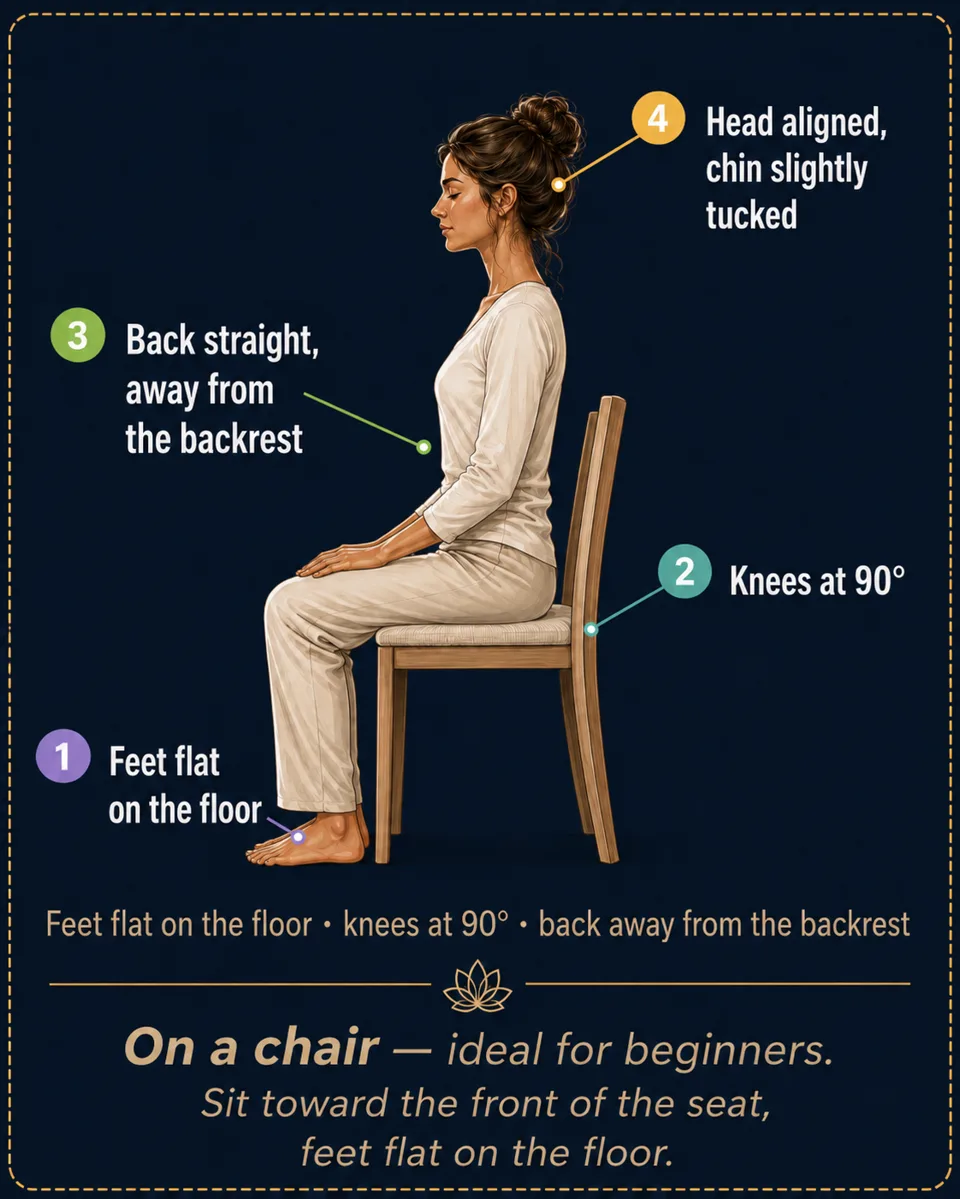
- Set up your posture — the foundation of any practice (section 2).
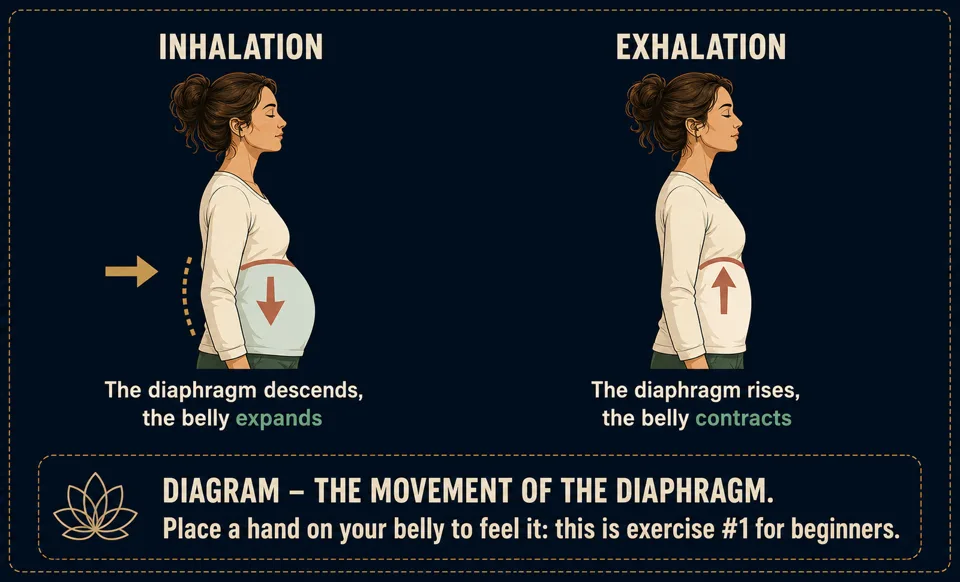
- Befriend your breath — the universal anchor and the breathing techniques (section 3).
- Understand your thoughts — what to do when the mind wanders (section 4).
- Explore the menu techniques — each card stands alone, with level, duration and guided steps.
- Follow the 4-week program — a marked path from the very first day to autonomy (section 5).
Rather practice than read?
Everything in this article can be practiced in MeditaDream, a free meditation app: 129 guided meditations and 17 immersive worlds, with no subscription, no ads, no account, and fully offline.
✦ Discover the free app