A 4-week meditation program for beginners
A progressive 4-week plan to build a meditation habit, plus the most common beginner mistakes and how to avoid them.
Meditation is learned like swimming: progressively, with a simple structure. This beginner meditation program takes four weeks — posture and breathing, then attention, then autonomy — a few minutes a day, with the common mistakes to avoid along the way.
Beginner program — 4 weeks
A marked, progressive and realistic path: a few minutes a day is enough. Each week introduces a new brick and consolidates the previous one. If you miss a day, simply resume the next — regularity rebuilds itself, it doesn't get lost.
| Week | Goal | Daily practice |
|---|---|---|
| Week 1 Lay the foundations |
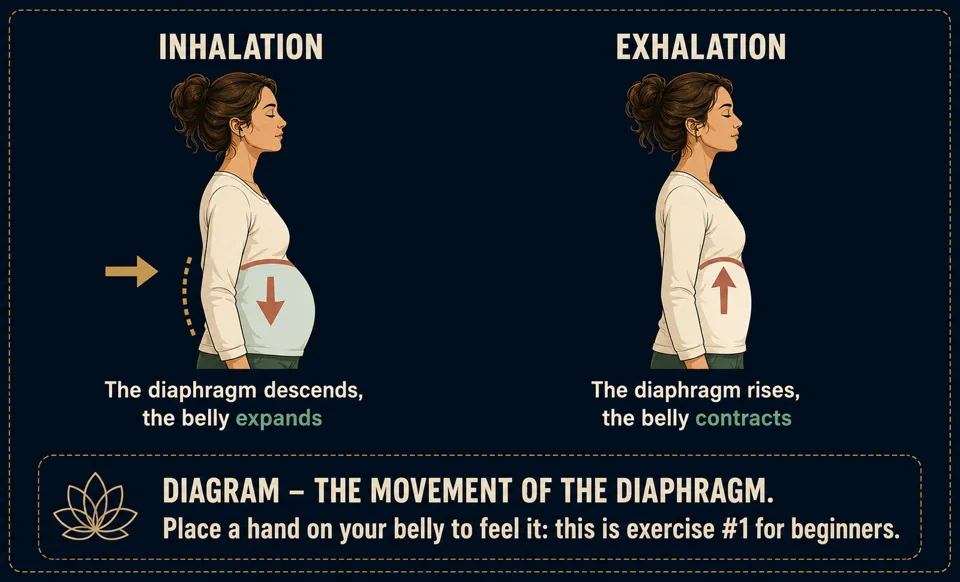
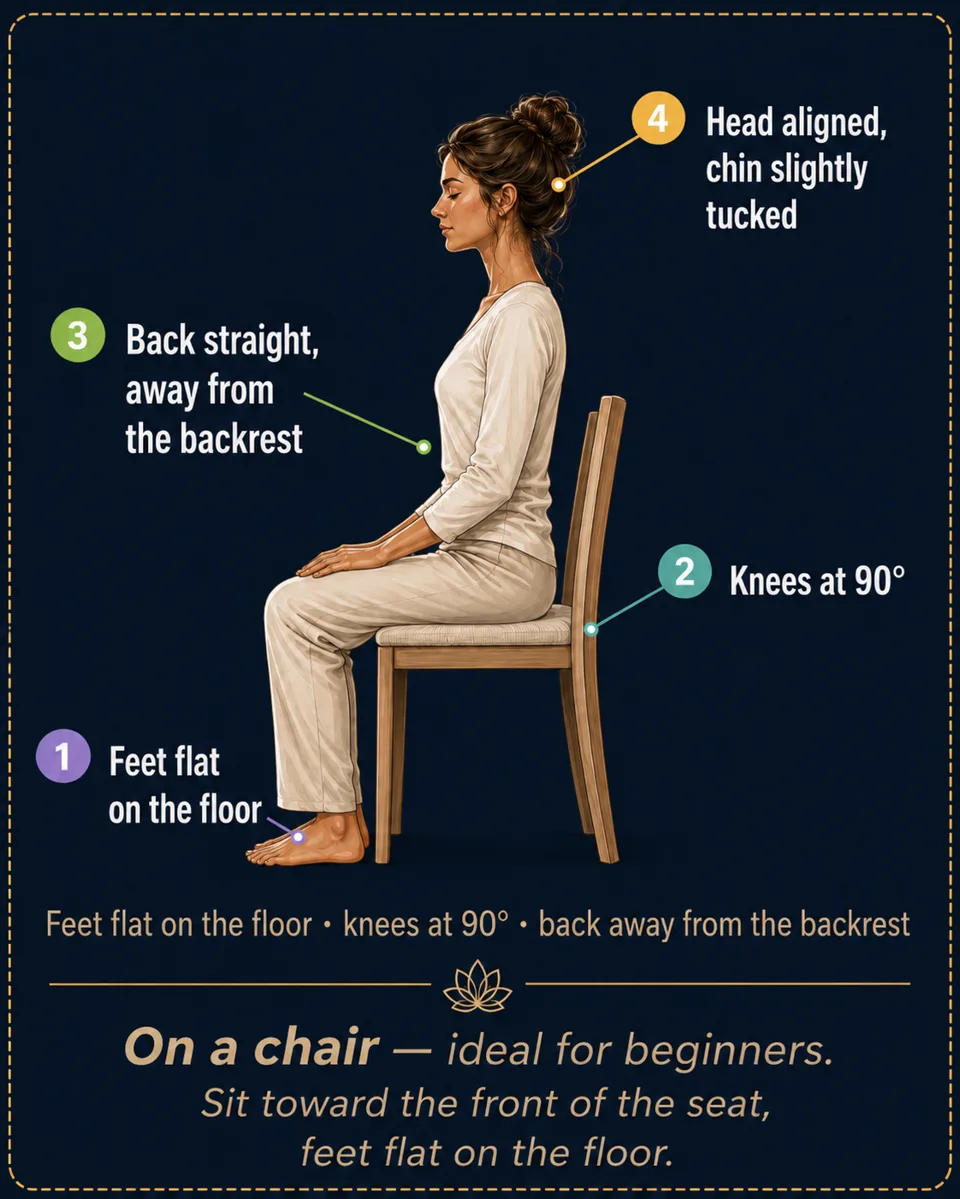
Posture + abdominal breathing | 5 min/day — Set up posture (2 min), then hand on belly: 10 abdominal breaths, and free observation of the breath. Days 6–7: try the interactive guide in coherence 5-5. |
| Week 2 Anchor attention |
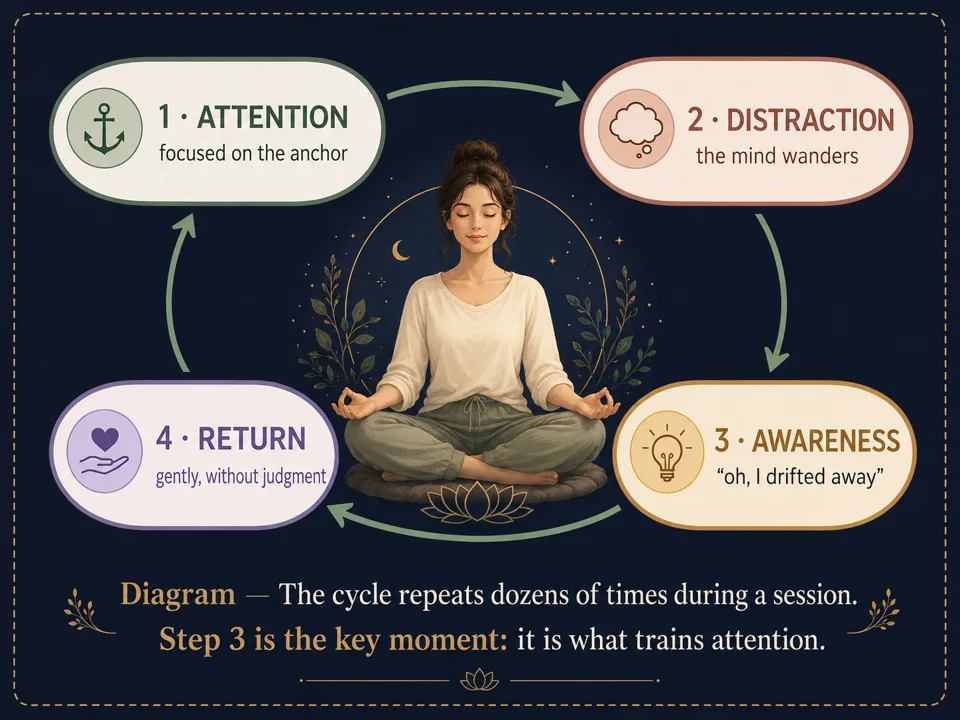
Mindful breathing + attention cycle | 8 min/day — Mindful breathing with counting 1 to 10. Train “noticing and returning”: each return counts. Every other day, finish with 2 min of sounds. |
| Week 3 Explore the body |
Body scan + walking | 10 min/day — Alternate: body scan (odd days), walking meditation (even days). Add a daily anchor: 3 conscious breaths at a chosen trigger-gesture. |
| Week 4 Open up |
Mindfulness + discovery | 12–15 min/day — Full mindfulness session (breath → sounds → sensations → open presence). Try 2 new techniques from the menu (Metta, mantra, visualization…) to find your affinities. |
Practical tips et common mistakes


When, where, how?
🕰 When?
- In the morning on waking: mind still calm, effect on the whole day
- At a fixed time: attach the session to an existing habit (after coffee, before the shower)
- Avoid: right after a heavy meal (drowsiness)
📍 Where?
- A dedicated corner, even tiny: cushion + corner of a room is enough
- Phone on airplane mode (except for the timer or the app)
- Total silence isn't required: noises become supports for attention
🧰 Equipment
- Nothing mandatory. Useful: firm cushion (zafu), bench, blanket
- Loose clothes, bare feet or socks
- A gentle timer — so you don't watch the clock
The 7 beginner mistakes (and their solutions)
| Mistake | Solution |
|---|---|
| 1 · Wanting to “empty the mind” | Aim for “notice and return,” never “stop thinking.” Emptiness isn't the goal, presence is. |
| 2 · Starting too long | 5 minutes held beats 30 minutes endured. Increase by only 2–3 minutes per week. |
| 3 · Practicing “when you think of it” | Same time, same place, same trigger: habit does 80% of the work. |
| 4 · Judging every session | There are no “good” or “bad” sessions — there are sessions done. A restless session trains as much as a calm one. |
| 5 · Giving up at the first difficult week | Motivation fluctuates, it's expected. Reduce duration to 3 minutes rather than skipping days. |
| 6 · Jumping from technique to technique | Give 2 weeks to a technique before changing. Depth comes from repetition. |
| 7 · Seeking “extraordinary states” | Chills, lights, great peace: pleasant but anecdotal. The real measure of progress is in daily life — patience, distance, presence. |
Frequently asked questions
How long before I “feel” results?
Eyes open or closed?
Guided or silent meditations?
I have pins and needles in my legs / back pain, what do I do?
Can meditation harm me?
Can I meditate with music?
Practice with the app
Rather practice than read?
Everything in this article can be practiced in MeditaDream, a free meditation app: 129 guided meditations and 17 immersive worlds, with no subscription, no ads, no account, and fully offline.
✦ Discover the free app