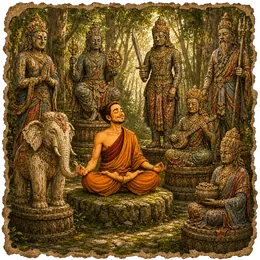
Guided Buddhist meditation in the footsteps of the bodhisattvas
Buddhist Meditations follows the great figures of the Mahayana tradition. Walk with Sudhana from teacher to teacher, meet the eleven faces of Avalokiteśvara, cut through looping thoughts with Mañjuśrī's sword, or go down with his lion into the valley of old fears. Carry Kṣitigarbha's light into the dark realms, revisit Samantabhadra's ten vows, climb up to Maitreya's garden and find a way out of eight dangers with Tārā.
Sessions last 20 to 30 minutes and are marked as intermediate. They suit practitioners curious about Buddhism and anyone who enjoys meditations rich in imagery and meaning. No belief is required: each figure serves as a guide to explore a quality such as wisdom, compassion or clarity in your own life.
The sessions
Sudhana’s Journey — The Teachers Along the Path
30 min · intermediateFollow Sudhana’s pilgrimage from teacher to teacher, and learn to see one situation through many eyes.
What it brings you- Spiritual growthEvokes learning from figures of wisdom.
- Buddhism & qigongEvokes learning and openness to different teachings.
The Eleven Faces of Avalokiteśvara
22 min · intermediateWith the eleven faces of Avalokiteśvara, learn to meet what comes with gentleness, firmness or silence.
What it brings you- Calm anxietyInvites you to respond to difficulties with more flexibility.
- Emotional balanceWorks on emotional flexibility and compassion.
- Spiritual growthExplores compassion and discernment.
- Buddhism & qigongExplores compassion and discernment.

Mañjuśrī’s Sword
20 min · intermediateMañjuśrī’s sword cuts through the sentences that keep looping: read them, see them, and stop fighting them.
What it brings you- Calm anxietyExplores repetitive thoughts through symbolic wisdom.
- Buddhism & qigongBuilds clarity in the face of repetitive thoughts.
Mañjuśrī’s Lion
20 min · intermediateGo down with Mañjuśrī’s lion into the valley of old fears, and look at the rules you apply to yourself.
What it brings you- Calm anxietyWorks symbolically with fears and inner demands.
- Buddhism & qigongExplores courage in the face of fear.

Kṣitigarbha’s Light in the Dark Realms
21 min · intermediateCross the dark realms — isolation, anger, weariness — with Kṣitigarbha’s light, carrying a lamp into each.
What it brings you- Calm anxietyExplores loneliness, weariness and compassion.
- Buddhism & qigongInvites compassion in difficult moments.
- Grief & letting goWorks with the idea of compassion in the face of suffering.
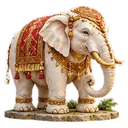
Samantabhadra and the White Elephant — The Ten Great Vows
20 min · intermediateOn Samantabhadra’s white elephant, revisit ten vows and see which still hold in an ordinary life.
What it brings you- Spiritual growthExplores ethical commitments.
- Buddhism & qigongExplores the meaning of ethical commitment.

Maitreya’s Garden — Meeting the Person You Are Becoming
20 min · intermediateClimb the stairway of Maitreya’s garden, pavilion after pavilion, until you meet the one you are becoming.
What it brings you- Spiritual growthReflects on your inner growth.
- Buddhism & qigongReflects on the path of transformation.
- More self-confidenceInvites you to reflect on how you’re growing.

Tārā and the Eight Great Dangers
24 min · intermediateOn an ancient road, Tārā shows the way out of eight great dangers — and the handle that was already on the door.
What it brings you- Calm anxietyExplores different fears within a symbolic setting.
- Buddhism & qigongWorks symbolically with fear and courage.
Bodhisattva meditation: compassion, clarity and protection
In Buddhist tradition, each bodhisattva embodies a quality. Avalokiteśvara, also known as Guanyin Bodhisattva, stands for compassion. Mañjuśrī stands for clarity, and the bodhisattva Tārā, much loved in Tibetan Buddhism, for protection. These guided journeys let you meet them and grow that quality in yourself.
You do not need to be Buddhist. The figures are a support for attention and kindness.
Buddhist meditation techniques: which journey to choose
Wondering how to meditate? Buddhism offers many paths, and here each journey follows a great Mahayana figure. For compassion, The Eleven Faces of Avalokiteśvara. For clarity, Mañjuśrī’s Sword. For a gentle look at who you are becoming, Maitreya’s Garden. Outside this category, The Ancient Temple world offers a Buddhist temple meditation among candles and stone Buddhas.
Practice for free
Every session is in the MeditaDream app: free, no subscription, no ads, no account, and it works offline.

Read more
More themes
Other categories
Frequently asked questions
How long should my session be?
The 8 sessions in “Buddhist Meditations” run 20 to 30 minutes. Start with the shortest, “Mañjuśrī’s Sword” (20 min), and move up once it feels easy; the longest, “Sudhana’s Journey”, runs 30 minutes. A short session every day does more than a long one now and then.
Can I meditate lying down?
You can, but sitting upright, back straight without strain, keeps you more alert and focused, which these sessions call for. A chair is enough, feet flat on the floor; if your back tires, finish lying down.
Do I need an internet connection?
Only to download each session the first time. After that, all 8 sessions in “Buddhist Meditations” play offline, even in airplane mode. No account, no subscription, no ads.
Do I need to be Buddhist?
No. These sessions draw on Buddhist figures and stories, but they focus on qualities everyone can explore, such as wisdom, compassion and clarity. No belief or prior knowledge of Buddhism is required to follow them.
What is a bodhisattva?
In Mahayana Buddhism, a bodhisattva is someone devoted to the awakening of all beings. It follows the path once walked by Gautama Buddha. Zen Buddhism grew from the same tradition. Each bodhisattva embodies a quality, and the sessions use them as guides for reflection.
Which session should I start with?
Mañjuśrī's Sword, at 20 minutes, is a good entry point: it works with the sentences that keep looping in your head. Sudhana's Journey, the longest at 30 minutes, gives a broader view of the path.
Is this the same as loving kindness meditation?
It shares the same heart: kindness toward yourself and others. Here it is practised as a guided journey with a bodhisattva, rather than by repeating phrases.
Do these journeys come from Tibetan Buddhist meditation?
Partly. Tārā and the eleven-faced Avalokiteśvara hold a central place in Tibetan meditation. The other figures, such as Mañjuśrī and Maitreya, are honoured across the Mahayana, from Tibet to Japan.
Where does Zen fit in?
Zen is a Mahayana school too. The history of Zen begins with the Chan masters of China. In Japan, Soto Zen Buddhism teaches “just sitting”, in silence. For a guided zen meditation, try The Zen Garden world.
From the blog on this topic
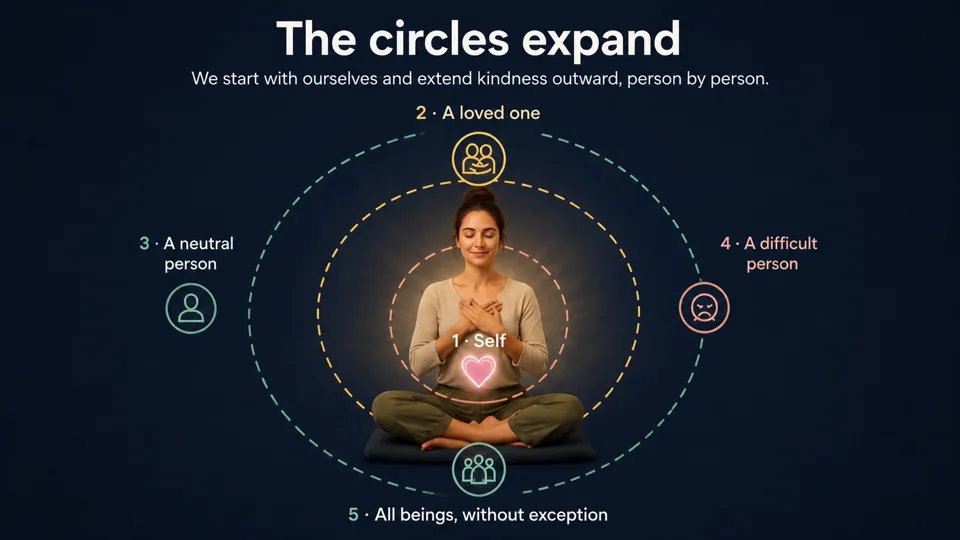 Published November 9, 2026Metta loving-kindness meditation: how to practice itMetta loving-kindness meditation step by step, for yourself and others: the five circles, the phrases to repeat and what to do when it resists.Read the article →
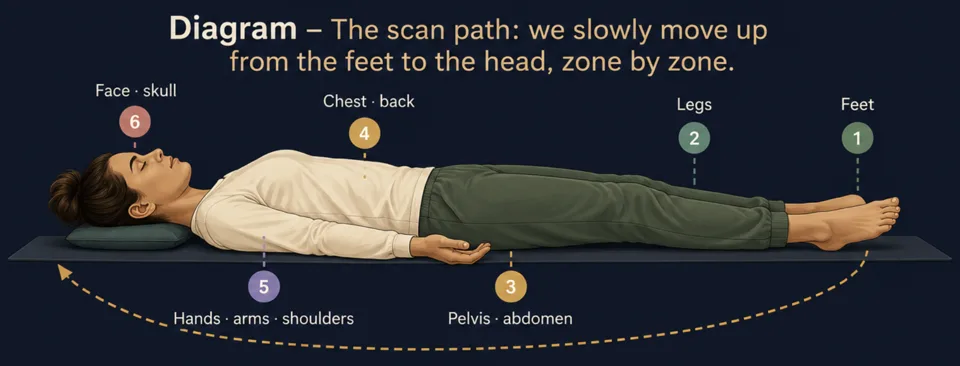 Published October 26, 2026Meditation and mindfulness techniques, explained one by oneThe main mindfulness techniques and types of meditation: body scan, walking meditation, loving-kindness, RAIN, visualization… each with its steps and diagram.Read the article →
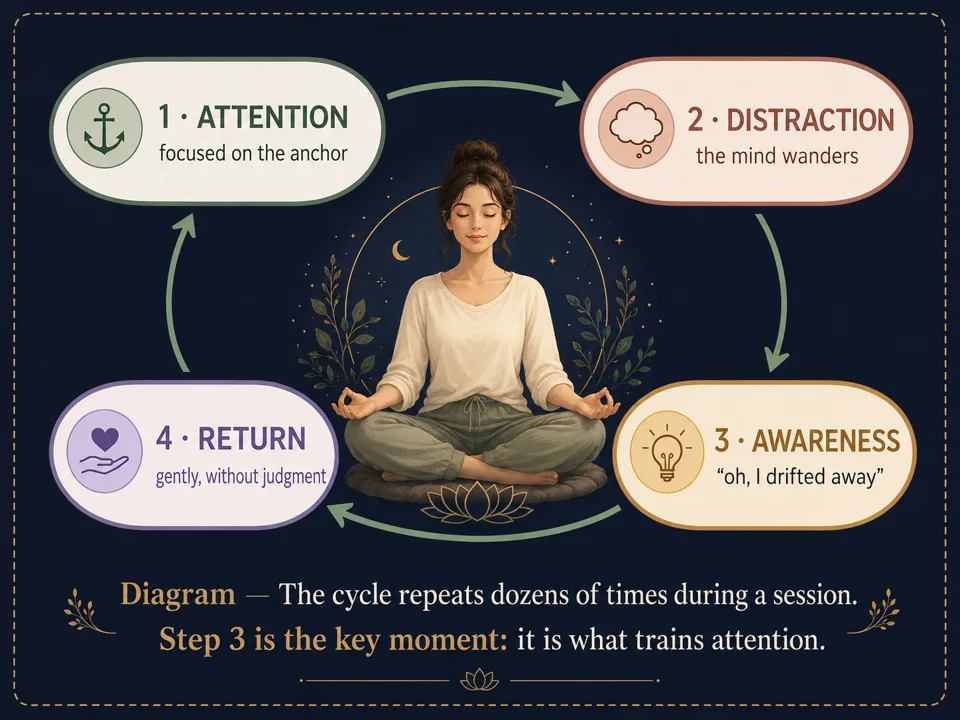 Published September 28, 2026Mindfulness in simple terms: what it is, how to practice itWhat is mindfulness in simple terms? A one-sentence definition, four stubborn misunderstandings and the core move that meditation actually trains.Read the article →