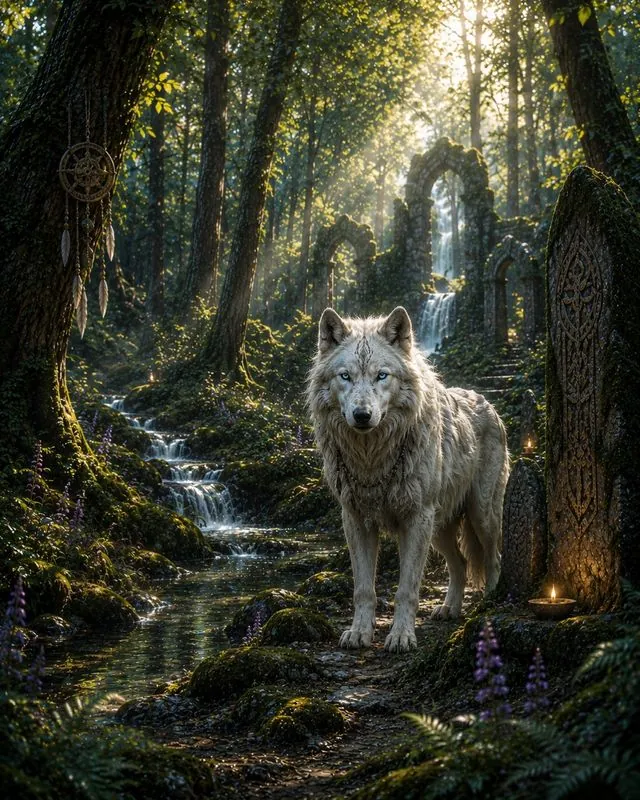
In short
Shamanic trance is an altered state of consciousness in which a shaman, often carried by a drum, journeys in spirit to other worlds. Shamanism is the family of traditions built around this figure, found from Siberia to the Americas. In these traditions, the journey serves the community: seeking guidance, protection or balance.
What is a shaman? The origin of the word
The word shaman comes from Evenki, a Tungusic language of Siberia. Among the Evenki, the šaman is the person who enters trance to communicate with the spirits on behalf of the community. The word reached European languages through Russian.
Anthropologists later used it for similar figures around the world: in Mongolia, among the Sámi of northern Europe, in the Amazon, in North America. Each tradition has its own name, language and rituals. In Korean shamanism, for example, the mudang, most often women, lead a ritual called gut. Speaking of shamanism in the singular is a convenience; in reality, there are many shamanisms. Many of them rest on animism, the view that animals, plants and places have a spirit of their own.
So what does a shaman do? Depending on the culture, a shaman may seek guidance for the group or look for the cause of a misfortune. Some also accompany the souls of the dead or help the hunt. At the heart of it lies the journey: a trance in which the shaman travels in spirit and comes back with something useful.
From Eliade to Harner: shamanism in the West
In 1951, the historian of religions Mircea Eliade published the book known in English as Shamanism: Archaic Techniques of Ecstasy. He described the shaman as a specialist of ecstasy, whose soul leaves the body to travel to the sky or the underworld. He also gave great weight to shamanic initiation, often a long and demanding ordeal. His work shaped how the West sees shamanism.
In 1980, the American anthropologist Michael Harner published The Way of the Shaman. He drew together elements shared by many cultures: the drum, the journey, the three worlds and the power animal. He called the result core shamanism, a practice without the rituals of any one people.
Core shamanism has made the shamanic path accessible to many, but it also raises questions. Many Indigenous peoples ask that their ceremonies not be copied or sold. The respectful attitude is simple: learn from the source cultures, do not claim their titles and call your practice by its true name.
What is trance? Shamanic trance and altered states of consciousness
A trance is an altered state of consciousness in which attention turns inward and becomes deeply absorbed. The outside world fades, inner images grow vivid and the sense of time shifts. You already know light versions of it, such as being lost in music.
The phrase altered states of consciousness became widely known through a 1969 book of that name, edited by the psychologist Charles Tart. It covers dreaming, hypnosis, meditation and the trance state brought on by rhythm. In the app, the Consciousness & Trance category explores several of these doorways.
In a shamanic trance, the person usually stays aware and remembers the journey. It is less a loss of control than a shift of focus, held by an intention and a rhythm.
Shamanic drumming: the rhythm of the journey
In many traditions, the drum carries the journey. In Siberia, it is often called the shaman's horse. The shamanic drum is usually a frame drum: a hide stretched over a wooden hoop, struck with a beater. The beat is steady, fast and repetitive, with no melody to follow. Rattles, chanting or dancing can play the same role.
Drumming for a shamanic journey usually follows a simple structure. A steady beat accompanies the traveler for a set time. Then a change in rhythm calls the traveler back, often a few sharp beats followed by a faster roll.
Researchers have studied how repetitive drumming affects attention and brain activity. Small studies suggest that rhythm makes it easier to turn inward and stay absorbed. Science, however, does not describe what the traveler meets.
The three worlds of the shamanic journey
Many shamanic traditions describe the universe in three levels, connected by a central axis: a world tree, a mountain or a pillar. The shaman climbs or descends along it. Eliade called it the axis of the world, or axis mundi.
In core shamanism, the lower world is often reached through an opening in the earth, such as a cave, a hollow tree or a spring. The upper world is reached by climbing a tree, a ladder or rising smoke. In the app, Journey to the Lower World and Journey to the Upper World, in Trances & Techniques, follow these two paths.
- Upper World
Reached by climbing a tree, a ladder or rising smoke. Often a realm of light, of teachers and of wide perspectives.
Journey to the Upper World · 25 min - Middle World
The spirit side of our own world: its places, its land and its living beings, seen with the eyes of the journey.
- Lower World
Reached through an opening in the earth: a cave, a hollow tree or a spring. Often the realm of power animals.
Journey to the Lower World · 30 min
Many shamanic traditions link three worlds along a central axis, such as a world tree.
Power animals: how to find your power animal
A power animal is a protective spirit that appears in animal form and accompanies the shaman. In many cultures, these allies are met during the journey, often in the lower world. Some traditions also link an animal to a person or a clan for life. The word totem, behind the phrase totem animals, comes from Ojibwe, a language of North America.
Finding your power animal in a guided meditation is simple. You set the intention, travel inward and notice which animal shows itself, often more than once. It may be humble, like a mouse, or majestic, like a bear. What matters is how it behaves and what it brings you.
The phrase spirit animal comes from Indigenous traditions, and many people now prefer animal guide out of respect. If you wonder how to find out what your spirit animal is, the shamanic answer is the journey itself, not a list or your birth month. Our page on spirit guides explores these figures further. In The Wolf Spirit Forest, a starry wolf becomes your guide for 15 minutes.
What is a shamanic journey? How a guided shamanic meditation unfolds
A shamanic journey is a trance voyage with a clear intention, made in the imagination and lived with all the senses. Here is how a guided shamanic meditation usually unfolds. For four complete journeys, see the Shamanic Trance category.
- Prepare the space
Find a quiet, dim room where no one will disturb you. Lie down or sit, and cover your eyes if you like.
- State your intention
Choose one simple purpose, such as meeting a protective animal or seeking a symbol for a decision.
- Find the entrance
Picture a place you know in nature: a cave, a tree, a pool. It becomes your doorway down or up.
- Travel with the drum
Let the rhythm carry you. Follow the path, notice what you see, hear and feel, and let the scene unfold.
- Meet and ask
If an animal or a figure appears, greet it, ask your question and accept whatever comes, even silence.
- Return by the same path
When the rhythm changes, thank those you met and come back the way you came, to your body and the room.
- Write it down
Note your journey right away. Its meaning often becomes clearer over the following days.
Is shamanic trance safe? Returning and grounding
A gentle guided trance is a form of deep relaxation, and you can open your eyes at any moment. Most people find it calming. Still, inner journeys can stir strong images or emotions, so a few habits help.
- Always end with a full return: name the room, feel your weight, move your hands and feet.
- Drink some water or eat something light afterward if you feel spacey.
- Never practice while driving or doing anything that needs your attention.
- On days when you feel fragile, choose a simple breathing session instead.
- Keep it simple: these journeys need nothing but your attention and a quiet room.
Shamanic trance in MeditaDream
The Shamanic Trance category offers four journeys of 23 to 30 minutes. The Vision Quest, 30 minutes, follows the old pattern of walking, waiting and letting what needs to be seen arrive. The Fire of the Ancients, The Circle of Protection and Returning with a Power Object complete it.
In the Trances tab of the Trance & Astral Projection screen, Journey to the Lower World, 30 minutes, follows an animal to the sound of the drum. Journey to the Upper World, 25 minutes, rises through wind and light. The Consciousness & Trance category explores other doorways, such as The 33-level Spiral.
Categories
 Shamanic Trance4 sessions · 23 to 30 min · intermediate
 Trances & Techniques7 sessions · 16 to 30 min · advanced
 Consciousness & Trance7 sessions · 20 to 32 min · intermediate
Sessions to try first
- The Vision Quest30 min · intermediate · Shamanic TranceAn inner journey in the manner of vision quests: walking, waiting, and letting what needs to be seen arrive.
- Returning with a Power Object30 min · intermediate · Shamanic TranceReturn from a journey with a power object: recognise it, hold it, and know what it brings back.
- Progressive Descent into Trance29 min · advanced · Trances & TechniquesGo down into trance in stages, with brief returns toward the surface.
- Journey to the Lower World30 min · advanced · Trances & TechniquesTo the sound of the drum, follow an animal and move like it in imagination.
- Journey to the Upper World25 min · advanced · Trances & TechniquesRise through wind and light, and watch your perspective widen.
Tools in the app
- Trance & Astral Projection
Open the Trances tab, under Non-Ordinary States, to find journeys such as Journey to the Lower World and Journey to the Upper World.
- Your Guides
Record the animal or figure you met with New guide, choose the Spirit Animal type and log each of its Reappearances.
- Spiritual Experiences
Write down each journey in this Journal notebook, privately, on your phone.
- Your Sanctuary
Describe the inner place where your journeys begin, from Forest or Cave to Mountain or Sky.
Related immersive worlds
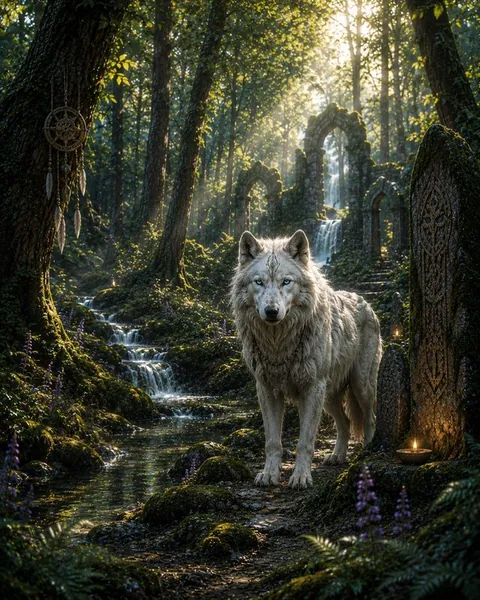 The Wolf Spirit Forest
 The Forgotten Ruins
 The Heart of the Earth
Frequently asked questions
What is a shaman?
A shaman is a person who, in many traditional cultures, enters a trance to communicate with the spirit world on behalf of the community. The word comes from Evenki, a language of Siberia. Shamans may seek guidance, protection or balance for the group, and lead important rituals. Each culture has its own name and practices for this role.
What is shamanism?
Shamanism is the family of traditions built around the shaman, a person who enters trance to communicate with the spirit world for the community. It has been described from Siberia, where the word comes from, to Korea, the Arctic and the Americas. Each culture has its own rituals and names. Many rest on animism, the view that animals, plants and places have a spirit.
What does a shaman do?
It depends on the culture. Traditionally, a shaman journeys in trance to other worlds to seek guidance or look for the cause of a misfortune. The journey may also aim to recover something lost or to accompany the souls of the dead. Shamans also lead ceremonies and keep the stories of the community. In every case, the journey is made for others, not as a personal adventure.
What is a shamanic journey?
A shamanic journey is an inner voyage made in a trance state, usually to the steady beat of a drum. The traveler enters through an opening, such as a cave or a tree, and explores the lower or upper world. There, they meet allies like power animals, then return by the same path. A guided meditation follows this structure in imagination.
What is shamanic drumming?
Shamanic drumming is a steady, fast, repetitive beat used to support trance. It has no melody, so the mind has nothing to follow but the rhythm. In Siberian traditions, the drum is often called the shaman's horse. A change in rhythm at the end signals the return. Many people find that the beat helps them stay with their inner images.
How do you find your power animal?
In shamanic practice, you find your power animal during a journey, often in the lower world. Set a clear intention, travel inward and notice which animal appears, especially if it shows itself several times. Greet it with respect and ask what it brings you. Afterward, note the encounter, and see whether the same animal returns in later journeys.
What is shamanic healing?
In traditional cultures, what people call shamanic healing is a spiritual role within a whole worldview. Misfortune is often seen as a loss of power, or of part of the soul. The shaman journeys to recover it and restore balance between people and the spirit world. Core shamanism calls this soul retrieval. These are cultural beliefs to respect. The meditations in MeditaDream draw on this imagery and make no promise about the body.
Is trance safe?
A gentle guided trance is a form of deep relaxation, and you can open your eyes and stop at any time. To stay comfortable, practice in a quiet place, never while driving, and always finish with a full return to your body. If what comes up weighs on you or keeps returning, ask a professional for advice.
What is core shamanism?
Core shamanism is the approach developed by the anthropologist Michael Harner, author of The Way of the Shaman in 1980. It gathers elements found in many cultures, such as the drum, the journey, the three worlds and the power animal, without the rituals of a specific people. It made shamanic practice accessible in the West, while raising questions of respect.
What is the difference between a power animal and a spirit animal?
In core shamanism, a power animal is a protective ally met during the journey, often in the lower world. Spirit animal is a broader, popular phrase for an animal that seems to reflect your nature or guide you. It comes from Indigenous traditions, so many people now say animal guide. In meditation, you can simply notice which animal comes back to you.
Shamanic trance on the blog
Articles on shamanic journeys, the drum and the traditions behind them.
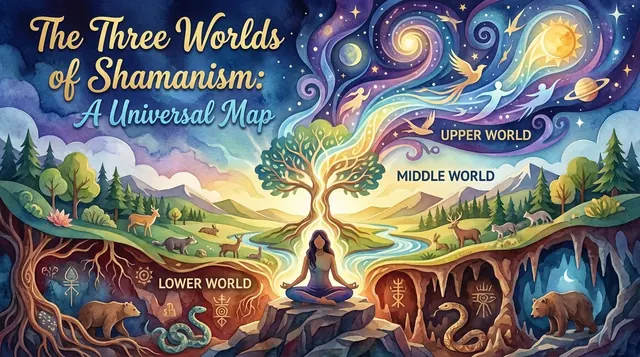 Published October 24, 2026World Tree: The Lower, Middle and Upper Worlds of ShamanismThe world tree links the Lower, Middle and Upper Worlds of shamanic cosmology. What this map means across cultures and how to use it in meditation today.Read the article →
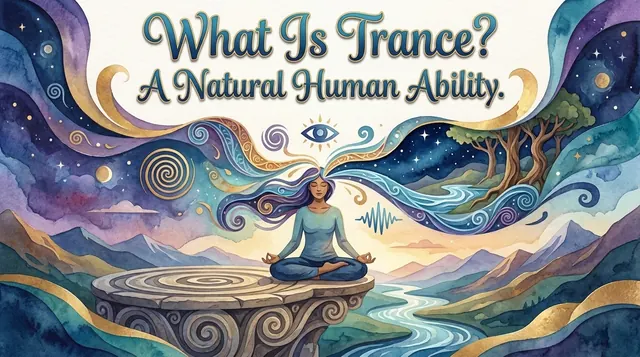 Published October 17, 2026Trance Meaning: The Everyday Altered State ExplainedTrance meaning: far more than drums and stage hypnosis. See how absorption, rhythm and attention reshape consciousness, with a simple 10-minute exercise.Read the article →
Coming soon
- Coming November 14, 2026Hypnosis vs Meditation: Key Differences and How to Choose
- Coming November 21, 2026Spirit Animal or Power Animal? How to Find Yours
- Coming December 7, 2026Altered states of consciousness, explained with examples
- Coming December 12, 2026Past Life Regression: Is It Real? A Careful Look
- Coming December 16, 2026Siberian Shamanism and the Origin of the Word Shaman
Practice for free
Every session is in the MeditaDream app: free, no subscription, no ads, no account, and it works offline.
✦ Discover the app