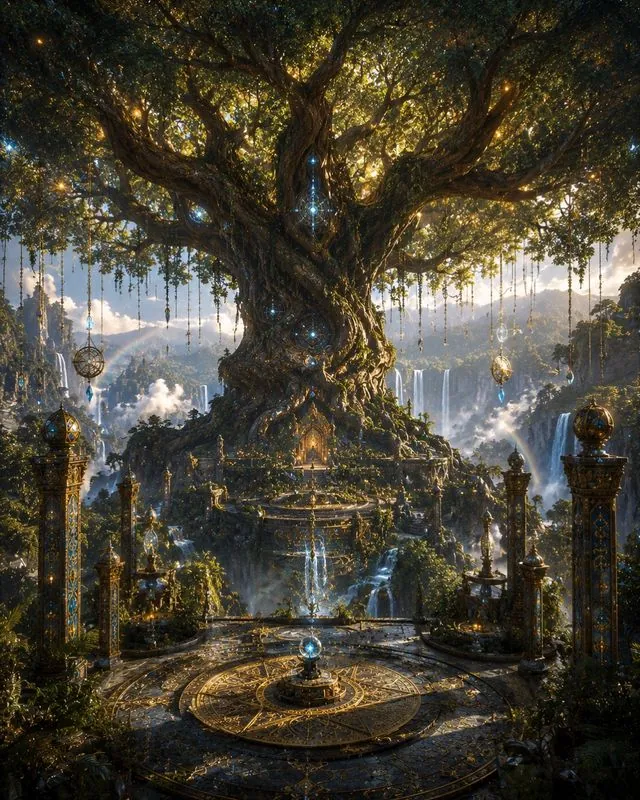
In short
The 7 chakras are seven centers of subtle energy that yogic and tantric traditions place along the spine, from its base to the crown of the head. Chakra means “wheel” in Sanskrit. Each one is linked to a place in the body, a theme and, in modern teaching, a color of the rainbow.
What are chakras? Chakra meaning and origins
In Sanskrit, cakra means “wheel” or “circle.” The word describes centers where, according to tradition, channels of subtle energy meet and turn. These channels are called nadis, and the life energy that flows through them is called prana.
Chakras come from the tantric traditions of India, both Hindu and Buddhist. The texts do not agree on their number: some systems describe four centers, others six, seven or more.
The seven-chakra map most people know today rests largely on one text, the Ṣaṭ-cakra-nirūpaṇa, written by Pūrṇānanda in 1577. It describes six centers, plus a thousand-petaled lotus at the crown. In 1919, the British scholar John Woodroffe, writing as Arthur Avalon, translated it in The Serpent Power. That book shaped how Western readers came to know the chakras.
- Crown chakra Sahasraratop of the head · awareness, unity
- Third eye chakra Ajnabetween the eyebrows · intuition, inner vision
- Throat chakra Vishuddhathroat · expression, truth
- Heart chakra Anahatacenter of the chest · love, compassion
- Solar plexus chakra Manipuraabove the navel · will, confidence
- Sacral chakra Svadhisthanalower belly · pleasure, creativity
- Root chakra Muladharabase of the spine · grounding, safety
The places and themes most often given in modern teaching. The rainbow colors are a twentieth-century Western addition.
The 7 chakras and their meanings, from the root chakra to the crown chakra
Here is each chakra with its Sanskrit name, its place in the body and the themes modern teachers associate with it. The petals, seed sounds and elements come from the traditional texts. The colors are a modern addition.
- Root chakra, Muladhara
Its name means “root support.” Also called the base chakra or first chakra, it sits at the base of the spine and stands for grounding and safety. Four petals, seed sound lam, element earth. Modern color: red.
- Sacral chakra, Svadhisthana
“One's own place,” in the lower belly. It is linked to pleasure, creativity and the flow of emotions. Six petals, seed sound vam, element water. Modern color: orange.
- Solar plexus chakra, Manipura
The “city of jewels,” or third chakra, above the navel. It carries will, confidence and inner fire. Ten petals, seed sound ram, element fire. Modern color: yellow.
- Heart chakra, Anahata
“Unstruck,” like a sound that needs no blow. The fourth chakra sits in the center of the chest and is linked to love and compassion. Twelve petals, seed sound yam, element air. Modern color: green.
- Throat chakra, Vishuddha
“Especially pure,” the fifth chakra sits at the throat. It stands for expression, listening and truthfulness. Sixteen petals, seed sound ham, element space. Modern color: blue.
- Third eye chakra, Ajna
“Command” or “perception,” between the eyebrows. It is the seat of intuition and inner vision. Two petals, seed sound om. Modern color: indigo.
- Crown chakra, Sahasrara
The “thousand-petaled” lotus, at the top of the head. It points to awareness and unity beyond the self. Modern color: violet or white.
Chakra colors: where the rainbow comes from
If you have seen a chakra chart, you know the chakra colors in order: red, orange, yellow, green, blue, indigo and violet. They are easy to remember, and they make a beautiful image. But you will not find them in the old texts.
The traditional sources give each lotus its own colors, and they do not follow the order of the rainbow. The rainbow sequence is a Western association of the twentieth century.
Today, it is part of how most people learn the chakras. You can use the colors as a simple support for imagery, while knowing they are a modern addition. If a different color comes to you in meditation, there is nothing wrong with it.
What is an aura? Aura colors and the chakras
In many modern teachings, the human aura is a field of subtle light said to surround the body. The word aura means “breeze” in Greek and Latin. Theosophical writers of the early twentieth century, such as Charles Leadbeater, described its colors in detail.
Today, aura colors are often linked to moods, or to the chakra of the same color: green with the heart, blue with the throat. Their meanings vary from one author to another.
No instrument has ever measured an aura. Kirlian photographs, often shown as aura pictures, record an electrical discharge around an object. In meditation, you can still picture a soft light around your body. Light Body Expansion, in Cosmic & Void, lets the body's warmth become a light that reaches beyond the skin.
Blocked, open, balanced: what chakra balancing means
Many books describe a blocked chakra as a center where energy no longer flows well, and an open chakra as one where it flows freely. Chakra balancing means bringing all seven back into harmony. Chakra alignment, chakra cleansing and chakra clearing are other names for the same idea. These are images from a spiritual tradition, not measurements.
In meditation, these images become something practical. You rest your attention on one area of the body, breathe there and notice what you feel. You may picture a color, a turning wheel or a soft light. A tight throat or a warm chest simply becomes something to observe.
What people mean by chakra healing usually lies here: a calm, attentive time spent with each center, often with breath and imagery. It is a practice of well-being and attention. It is not a way to repair the body, and the sessions in the app make no such promise.
Kundalini awakening: the energy coiled at the base of the spine
In tantric yoga, kundalini is a dormant energy coiled at the base of the spine, often pictured as a sleeping serpent. Practices aim to awaken it so that it rises through the central channel, the sushumna, to the crown. This is the journey The Serpent Power describes.
Kundalini practice traditionally involves intense breathing, postures and long training with a teacher. The chakra meditations in the app are much gentler. They work with attention and imagery, not with forceful techniques. For a calm way to sense the body as light, Light Body Expansion, in Cosmic & Void, lasts 31 minutes.
Are chakras real? What science says
Chakras are not anatomical structures. Dissection and imaging have never found them, and they do not match any specific organ. Some authors compare their positions to major nerve clusters along the spine, but that is a modern interpretation.
Researchers do study interoception, the sense of the body's inner state: heartbeat, breath, warmth, tension. Meditation trains exactly this kind of attention. The chakras offer it a clear path to follow, one point at a time.
So you can approach the chakras in two ways: as a spiritual map with deep roots, or simply as seven points of attention along the body. Both work for meditation, and you do not need to believe anything to begin.
How to do a chakra meditation for beginners
This simple 15-minute chakra meditation works seated or lying down. For a fully guided version, the Body, Calm & Sleep category includes the app's chakra sessions.
- Settle
Sit with a long spine, or lie on your back. Take a few slow breaths and feel your weight.
- Begin at the root
Rest your attention at the base of the spine. Breathe there for a minute. If it helps, picture a warm red glow.
- Climb center by center
Move to the lower belly, the navel, the chest, the throat, the point between the eyebrows and the top of the head. Give each one a few breaths.
- Notice without fixing
Some areas feel clear, others vague. Let them be as they are. The noticing is the practice.
- See the whole line
Feel the seven points together, like beads on a thread from base to crown.
- Come back down
Bring your attention back to your feet and the ground before you open your eyes.
How to open your third eye chakra in meditation
How to open your third eye is one of the most searched questions about chakras. In tradition, Ajna is the seat of inner vision, and opening it means seeing more clearly within. Some modern authors link it to the pineal gland, which Descartes called the principal seat of the soul.
In practice, third eye meditation is gentle. Rest your attention between the eyebrows, without squinting, and watch the dark space behind your closed eyes. Images may appear, or not. Stay curious rather than eager. People also ask how to activate or awaken the third eye, and the answer is the same: gentle, regular attention.
The Third Eye category offers five advanced sessions of 22 to 26 minutes. They range from The Third Eye and the Two Physical Eyes to The Mandala that Builds Itself. To strengthen your inner images first, see our guide to guided imagery. And if you enjoy subtle sensations in motion, qigong works with energy centers of its own.
Chakra meditation in MeditaDream
Wondering which is the best guided chakra meditation to start with? Try Recognizing the Seven Chakras, 27 minutes. It maps the seven points in your body before giving them any color or meaning. To realign chakras, choose Aligning the Seven Chakras, 30 minutes. It places them on a single line from base to crown. Chakra Reset, 18 minutes, travels slowly through all seven with long, restful pauses, which suits the evening.
Activating the Energy Body, 27 minutes, explores the body's subtle sensations without forcing them to appear. The five sessions of the Third Eye category then take you further with Ajna. All of them are free and play offline once downloaded.
Categories
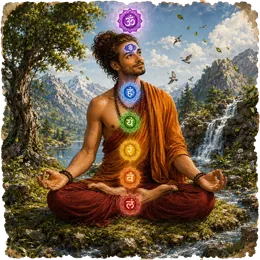 Body, Calm & Sleep16 sessions · 7 to 30 min · intermediate
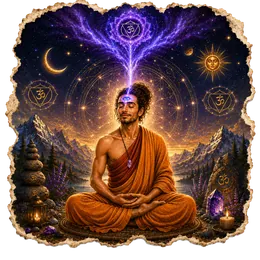 Third Eye5 sessions · 22 to 26 min · advanced
 Sensations & Qigong4 sessions · 20 to 25 min · intermediate
Sessions to try first
- Recognizing the Seven Chakras28 min · intermediate · Body, Calm & SleepA body map of the seven centres: learn to locate each one before any colour or interpretation.
- Aligning the Seven Chakras30 min · intermediate · Body, Calm & SleepAlign the seven centres on a single line, from base to crown, and feel the inner reference that emerges.
- Chakra Reset18 min · intermediate · Body, Calm & SleepA deeply calming guided journey through all seven chakras, narrated slowly with long, restful pauses.
- Activating the Energy Body27 min · intermediate · Body, Calm & SleepNotice the body’s subtle sensations, without forcing them to appear.
- The Inner Eye Awakens22 min · advanced · Third EyeLet an image be born at the centre of the forehead, hold it, transform it, then let it vanish as cleanly as it came.
Tools in the app
- Meditation history
After each chakra session, note what you felt in sections such as Body sensations and Images & symbols.
- Timer
Sit in silence for your own chakra practice, with an interval bell to tell you when to move to the next center.
- Zen Passport
Earn a stamp for each category you practice, including Body, Calm & Sleep and Third Eye.
- The Oracle
Type how you feel and receive three cards, each one a matching meditation.
Related immersive worlds
 The Tree of Consciousness
 The Infinite Crystal Cave
 The Heart of the Earth
Frequently asked questions
What are the 7 chakras?
The 7 chakras are centers of subtle energy described by the yogic and tantric traditions of India. From the base of the spine upward, they are Muladhara (root), Svadhisthana (sacral), Manipura (solar plexus) and Anahata (heart). Then come Vishuddha (throat), Ajna (third eye) and Sahasrara (crown). Each one is linked to a theme, from grounding to spiritual connection.
What color is each chakra?
In the modern system, the root chakra is red, the sacral chakra orange and the solar plexus chakra yellow. The heart chakra is green, the throat chakra blue, the third eye indigo and the crown violet or white. These rainbow colors are a Western association of the twentieth century. The old tantric texts describe the lotuses with other colors.
How do you balance your chakras?
In meditation, chakra balancing usually means visiting each center with calm attention. You breathe into each area, from the root to the crown, and notice what you feel without trying to fix it. Many people add a color or a turning wheel as imagery. See it as a practice of attention and well-being, with no promise about the body.
What is a blocked chakra?
In spiritual teaching, a blocked chakra is a center where energy is said to flow poorly. People often link it to the chakra's theme, such as a blocked throat chakra and difficulty speaking up. This is a symbolic language, not a measurable state. In meditation, you can simply notice which areas feel vague and give them gentle attention.
How do I open my third eye?
Sit comfortably, close your eyes and rest your attention between your eyebrows, without straining. Breathe slowly and watch the dark space in front of you. Images, colors or nothing at all may appear, and all of that is fine. Short, regular sessions work better than long, forced ones. The Third Eye category in the app guides you through five sessions.
Are chakras real?
Chakras are not physical organs, and science has not found them in the body. They belong to the spiritual traditions of India, where they describe the subtle body. Many people still find them useful as a map for attention: seven points along the spine to explore, one after another. You do not need to believe in them to meditate with them.
What is kundalini?
In tantric yoga, kundalini is an energy said to lie coiled at the base of the spine, like a sleeping serpent. Traditional practices aim to awaken it so that it rises through each chakra to the crown. These practices can be intense and are usually learned with an experienced teacher. Gentle chakra meditation is a calmer place to start.
What is the Anahata chakra?
Anahata is the Sanskrit name of the heart chakra, the fourth of the seven. It means “unstruck,” like a sound that needs no blow. Located in the center of the chest, it is linked to love, compassion and openness. Tradition gives it twelve petals and the element air, and modern charts color it green.
What is the fifth chakra?
The fifth chakra is the throat chakra, Vishuddha, a name that means “especially pure.” It is linked to expression, listening and truthfulness. Tradition gives it sixteen petals and the element space, and modern charts color it blue. In meditation, you can rest your attention at the throat and notice how speaking, or holding back, feels there.
What does the solar plexus chakra do?
The solar plexus chakra, Manipura in Sanskrit, is the third chakra. It sits above the navel. Its name means “city of jewels,” and its element is fire. Modern teachers link it to will, confidence and inner fire, and color it yellow. To meditate on it, breathe into the upper belly and picture a warm glow, without forcing anything.
How are yoga and chakras linked?
Chakras come from the tantric side of yoga, where breath, postures and attention work with the subtle body. Many modern classes link poses to chakras, such as backbends to the heart chakra, and some call this chakra yoga. You do not need postures, though. Meditation and chakras go together naturally: calm, seated attention is enough.
Chakras on the blog
More on each chakra, its symbols and simple ways to meditate with the energy centers.
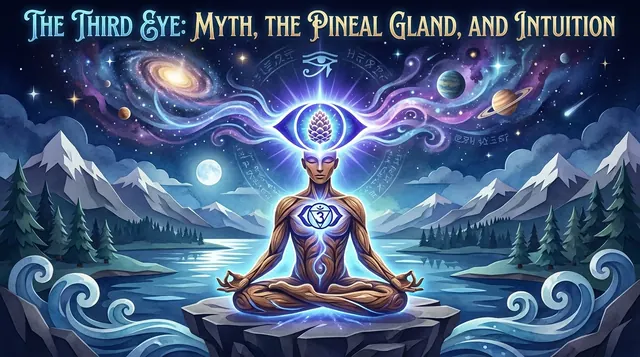 Published November 11, 2026Third Eye Meaning: Pineal Gland, Myth and IntuitionThird eye meaning, from the Ajna chakra to what the pineal gland really does: why you feel pressure between your eyebrows, and an honest meditation.Read the article →
 Published November 7, 2026How to Open Your Heart Chakra Without Losing YourselfHow to open your heart chakra without having to love everyone: compassion, boundaries and grief, with three practices and a 7-minute routine.Read the article →
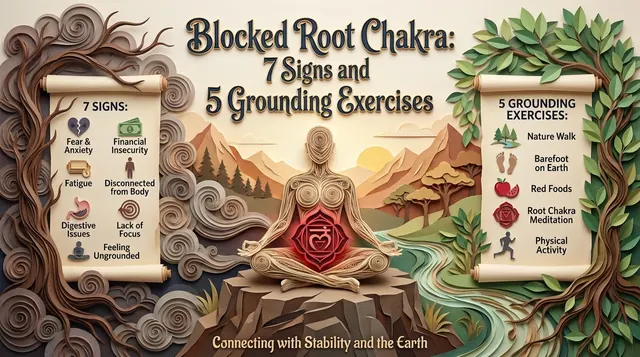 Published October 10, 2026Blocked Root Chakra: 7 Signs and 5 Grounding ExercisesLearn 7 signs linked to a blocked root chakra, like feeling unsettled, anxious or stuck in your head, and 5 grounding exercises to feel steady again.Read the article →
Coming soon
- Coming December 14, 2026Chakra locations: the 7 chakras explained as a body map
- Coming January 13, 2027Kundalini Awakening Signs: Practice and Precautions
- Coming January 30, 2027Can People See Auras? What Science Says About the Aura
- Coming February 20, 2027Chakra Balancing Meditation: 20 Minutes From Root to Crown
Practice for free
Every session is in the MeditaDream app: free, no subscription, no ads, no account, and it works offline.
